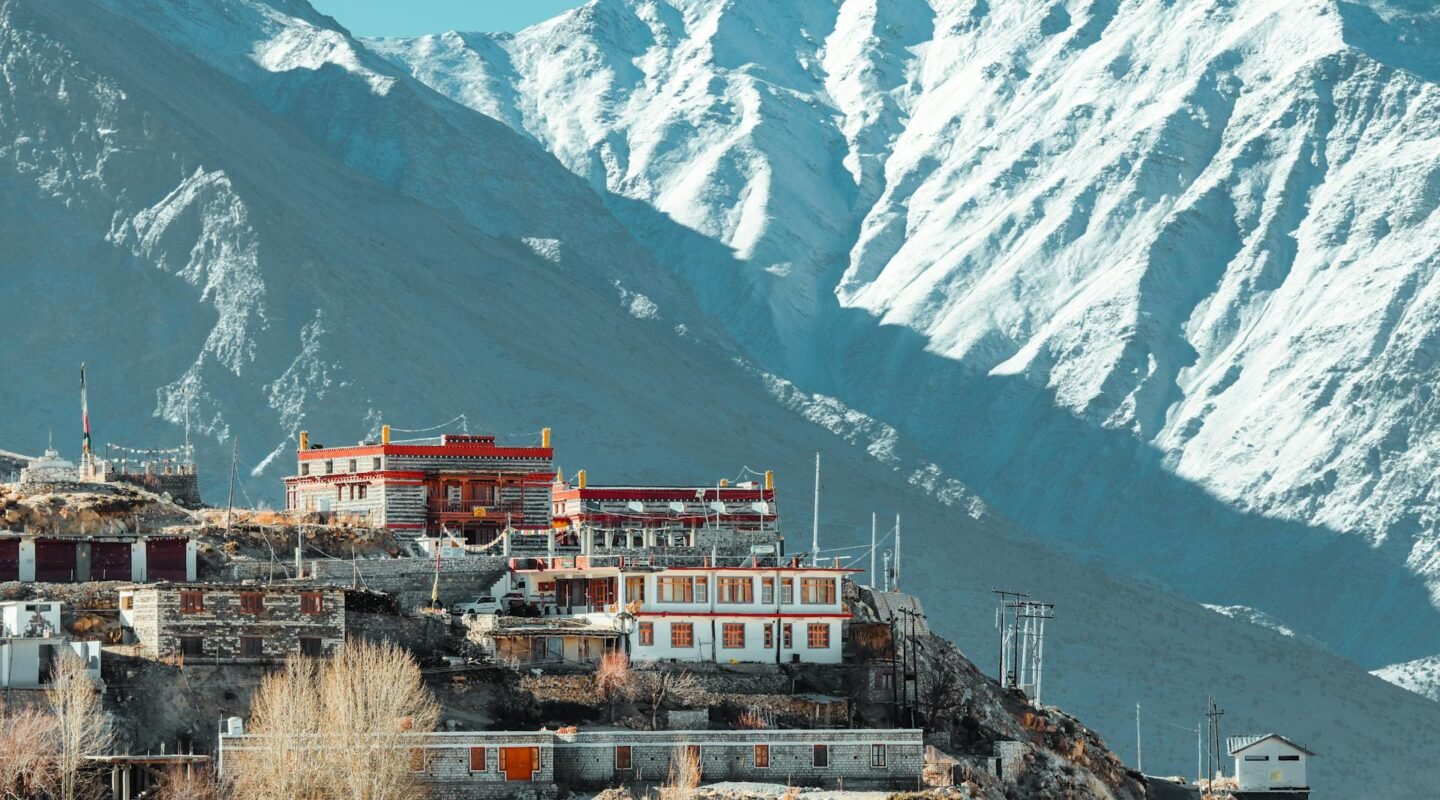

Most people discover Spiti Valley in summer, via the Manali-Kaza highway. The passes open, the backpackers arrive, the cafes fill up, and the ancient monasteries host a constant queue of visitors. It is beautiful. But it is not Spiti.
Spiti in winter — roughly November through March — is something else entirely. The highway closes, the villages seal themselves in, and the population shrinks to its permanent residents and a handful of hardy travellers who came the long way around via Shimla.
When to Go
Late January to mid-February offers the most dramatic conditions: the Spiti river partially freezes, the Kibber Wildlife Sanctuary sees snow leopard activity peak, and the Losar festival (Tibetan New Year) typically falls in this window.
Getting There in Winter
The only reliable winter route is via Shimla → Rampur → Rekong Peo → Nako → Sumdo → Kaza. This road stays open through winter but requires a 4WD vehicle from Nako onwards. Budget two full days of travel from Delhi.
Where to Stay
Most homestays in Kaza, Langza, Komic, and Kibber stay open through winter. Hosts are extraordinarily welcoming — being snowed in with interesting guests is a relief from the isolation, and families will often invite you to share meals and butter tea by the fire.
Snow Leopard Sightings
The Kibber Wildlife Sanctuary offers the highest documented snow leopard density of any protected area in the world. Sightings are never guaranteed, but working with a local guide significantly improves your odds.
The Cold Reality
Nighttime temperatures regularly reach −25°C in Kaza, −30°C in Komic and Langza. Sleeping bag rated to −20°C minimum. Thermal base layers are insufficient alone — you need proper down insulation.
